Showing posts with label wildlife crime. Show all posts
Saturday, 5 March 2011
Wildlife crime - the police perspective
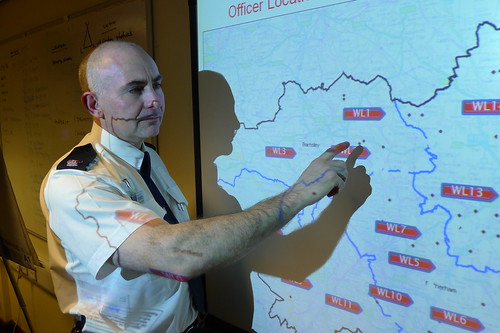
I was invited by South Yorkshire Police to take part in Operation Dunlin, a major offensive against wildlife crime across the South Yorkshire area, overnight on Thursday 3rd-Friday 4th March.
It was a fascinating insight into the nature of wildlife crime (at least in that area), the way police tackle it, and the problems they face. I'll write up the night's events separately, but here's a short audio interview with Superintendent David Hartley (pictured above), wildlife lead for South Yorkshire Police, and Silver Commander for the operation.
He talks about the nature of wildlife crime in his area (mostly lamping with dogs on farmland), his relationship with local gamekeepers (valuable eyes and ears, and an important part of the rural community), the incidence of bird of prey persecution (virtually nil, except one case where a farmer, not a gamekeeper, was convicted of placing a poisoned carcase), and the use of the Hunting Act (irrelevant as regards foxhunting, but can be a useful tool against poachers lamping with dogs).
Wednesday, 2 March 2011
BASC welcomes "sensible and functional" WANE Bill
The British Association for Shooting and Conservation (BASC), has commended the Scottish Parliament for passing sensible and functional legislation aimed at protecting Scotland’s wildlife.
Under the Wildlife and Natural Environment (Scotland) Bill outdated game licences have been abolished, archaic poaching laws have been reformed and the practice of catching up game birds for breeding stock has been legally recognised.
Vicarious liability, which will make the perpetrators of persistent raptor persecution accountable for the actions of their employees, is a measured and targeted approach to addressing wildlife crime.
Snaring remains a legal practice in spite of an attempt to ban it. However further regulations have been brought in to ensure best practice. These include the use of tags and record keeping, as well as training and accreditation.
Several amendments which would have restricted shooting by introducing the power to remove shooting rights have been defeated. A proposal to transfer some police powers to other agencies, such as the Scottish SPCA, was withdrawn.
BASC Scotland’s Nicolle Upton said: “BASC Scotland has been working tirelessly to ensure that this legislation would benefit shooting and gamekeeping. Unreasonable proposals to restrict deer stalking were dealt with at the consultation stage and the Bill as introduced was welcomed by shooters. The Bill has been a useful vehicle which has given MSPs the opportunity to see land management activities such as snaring in practice and to be briefed in depth on how the countryside actually works. As a result we have achieved something both sensible and workable."
Under the Wildlife and Natural Environment (Scotland) Bill outdated game licences have been abolished, archaic poaching laws have been reformed and the practice of catching up game birds for breeding stock has been legally recognised.
Vicarious liability, which will make the perpetrators of persistent raptor persecution accountable for the actions of their employees, is a measured and targeted approach to addressing wildlife crime.
Snaring remains a legal practice in spite of an attempt to ban it. However further regulations have been brought in to ensure best practice. These include the use of tags and record keeping, as well as training and accreditation.
Several amendments which would have restricted shooting by introducing the power to remove shooting rights have been defeated. A proposal to transfer some police powers to other agencies, such as the Scottish SPCA, was withdrawn.
BASC Scotland’s Nicolle Upton said: “BASC Scotland has been working tirelessly to ensure that this legislation would benefit shooting and gamekeeping. Unreasonable proposals to restrict deer stalking were dealt with at the consultation stage and the Bill as introduced was welcomed by shooters. The Bill has been a useful vehicle which has given MSPs the opportunity to see land management activities such as snaring in practice and to be briefed in depth on how the countryside actually works. As a result we have achieved something both sensible and workable."
Labels:
basc,
birds of prey,
gamekeeping,
wildlife crime
Tuesday, 8 February 2011
Harriers: the case for management
I've had a fascinating conversation with Dr Adam Smith, director of the Game and Wildlife Conservation Trust Scotland.
As you might expect, he sees the harrier/grouse conflict from the shooting landowners' perspective. But he also brings a scientist's objectivity to the problem, and he's not afraid to confront the issues. And, of course, he has a unique insight into the estate owners' position - after all, he has spent years advising them on how to manage their grouse moors to make them more productive, not just in terms of grouse bags, but in a wider sense too.
I've embedded below a recording of the phone interview, but here are the main points I took from our conversation:
As I've mentioned in private emails to one or two correspondents, I don't believe it's realistic to think that we will be granted licences to kill birds of prey - even though there's a good logical argument that, in certain circumstances, we should be (and yes, I'm aware that we can point to examples where even the RSPB has applied lethal control methods - although not, so far as I'm aware, against raptors which are widely regarded, somewhat illogically, as a special case).
Not only that, I think it harms shooting's position for us to campaign and lobby for a licensing system to kill birds of prey. If we could drop any ambitions for lethal control, I'm sure we'd have support from RSPB and others to develop effective methods of non-lethal control.
That last point was too much for one shooter, who told me in no uncertain terms: "Instead of censoring the shooting community and advocating appeasement why not support it against the conservation Taliban or are you actually one of them?"
As I'm learning, this debate has its fanatics on both sides! Anyhow, here's that interview with Adam Smith:
As you might expect, he sees the harrier/grouse conflict from the shooting landowners' perspective. But he also brings a scientist's objectivity to the problem, and he's not afraid to confront the issues. And, of course, he has a unique insight into the estate owners' position - after all, he has spent years advising them on how to manage their grouse moors to make them more productive, not just in terms of grouse bags, but in a wider sense too.
I've embedded below a recording of the phone interview, but here are the main points I took from our conversation:
- GWCT believes in managed wildlife solutions. In Britain, says Smith, we have fundamentally altered all our landscapes already. It's naive to suggest there's any alternative to management - whether it's corvids and songbirds, or harriers and grouse. We cannot step back and let nature look after itself.
- The Joint Raptor Study which ran at Langholm in the 90’s demonstrated what can go wrong; a balance needs to be struck.
- 'Management' doesn't mean killing harriers. There are more subtle ways of managing the harrier population. Smith has done work with Steve Redpath and others on 'non-lethal' methods. These include 'soft interventions' such as i) Diversionary feeding (but the effect is unproven, and it's impractical in many cases), and ii) Removing harrier chicks when they hatch, raising them in captivity, then releasing them where or when they no longer threaten the grouse. The latter would require a licence.
- It is perfectly possible to have a thriving grouse moor and a population of harriers - "That's an entirely sustainable position" says Smith.
- The big risk for grouse moors is when grouse numbers fall to low levels (which can happen due to disease etc) - that's when harriers (and other predators) can prevent numbers ever building up again. This is called the 'predator trap'.
- Grouse moor owners need to be offered a legal way out of the predator trap.
- RSPB and others have resisted going along with any suggestions of legalised harrier control/management because it looks like giving in to blackmail - along the lines of "Let us control harriers or we'll carry on doing it illegally."
As I've mentioned in private emails to one or two correspondents, I don't believe it's realistic to think that we will be granted licences to kill birds of prey - even though there's a good logical argument that, in certain circumstances, we should be (and yes, I'm aware that we can point to examples where even the RSPB has applied lethal control methods - although not, so far as I'm aware, against raptors which are widely regarded, somewhat illogically, as a special case).
Not only that, I think it harms shooting's position for us to campaign and lobby for a licensing system to kill birds of prey. If we could drop any ambitions for lethal control, I'm sure we'd have support from RSPB and others to develop effective methods of non-lethal control.
That last point was too much for one shooter, who told me in no uncertain terms: "Instead of censoring the shooting community and advocating appeasement why not support it against the conservation Taliban or are you actually one of them?"
As I'm learning, this debate has its fanatics on both sides! Anyhow, here's that interview with Adam Smith:
Labels:
conservation,
gamekeeping,
grouse,
hen harriers,
wildlife crime
Wednesday, 26 January 2011
Harriers & grouse update
My post on harriers and grouse moors has already borne fruit, in that Tom Cameron kindly suggested I contact Steve Redpath at the University of Aberdeen's Centre for Environmental Sustainability. Steve has done plenty of work on the harrier/grouse conflict, and tells me he is determined to help find a solution.
"We are only going to move on if there is broad agreement about illegal killing and impact," he says. "There are various possible solutions to the problem, but we are only going to get there through dialogue and especially dialogue between the moderates on both sides, whilst isolating the extreme views." For the record, he states that "there is pretty compelling evidence from a variety of sources that illegal killing is going on and limiting harrier numbers on managed grouse moors".
Steve also warned me against writing off the raptor lobby as extremists, pointing out that they are as diverse as the shooting lobby, with a wide spread of views. And he pointed me in the direction of some of his published work on this subject - for instance the positive and forward-looking Hen harriers and red grouse: moving towards consensus? published in the Journal of Applied Ecology in 2009. He also pointed me to the Environment Council's Hen Harrier Dialogue.
Steve has given me plenty to think about, and plenty of homework to do - but I find it immensely encouraging that this sort of work is already going on towards a solution.
Over the next few days I hope to talk to several people at the sharp end, as it were, and discover what the conflict looks like from their perspective. Watch this space...
"We are only going to move on if there is broad agreement about illegal killing and impact," he says. "There are various possible solutions to the problem, but we are only going to get there through dialogue and especially dialogue between the moderates on both sides, whilst isolating the extreme views." For the record, he states that "there is pretty compelling evidence from a variety of sources that illegal killing is going on and limiting harrier numbers on managed grouse moors".
Steve also warned me against writing off the raptor lobby as extremists, pointing out that they are as diverse as the shooting lobby, with a wide spread of views. And he pointed me in the direction of some of his published work on this subject - for instance the positive and forward-looking Hen harriers and red grouse: moving towards consensus? published in the Journal of Applied Ecology in 2009. He also pointed me to the Environment Council's Hen Harrier Dialogue.
Steve has given me plenty to think about, and plenty of homework to do - but I find it immensely encouraging that this sort of work is already going on towards a solution.
Over the next few days I hope to talk to several people at the sharp end, as it were, and discover what the conflict looks like from their perspective. Watch this space...
Tuesday, 25 January 2011
Hen harriers - fear, loathing, and few facts
Hen harriers are in the news again. This may or may not have something to do with the fact that the WANE (Wildlife And Natural Environment) Bill is currently going through the Scottish Parliament, and various groups have identified it as their best chance of attacking sporting estates in general, and shooting in particular.
They're jumping at the opportunity to have the law rewritten in their favour - perhaps winning the 'vicarious liability' that they claim would solve everything (it wouldn't, but that's another story)
The more strident anti shooting/pro raptor voices are growing shriller, and we are seeing the carefully managed 'release' of 'suppressed' information which, it's claimed, provides scientific proof, no less, of widespread 'persecution' by gamekeepers threatening the very existence of an iconic bird of prey.
'Silence over hen harrier carnage' shrieks the Raptor Persecution Scotland blog, for instance. They point to 'damning evidence' presented in the leaked Hen Harrier Conservation Framework [word doc] which they claim demonstrates 'the indisputable link between hen harrier persecution and heather moorland that’s managed for red grouse shooting'.
Actually, it isn't, and it doesn't. The report brings no new evidence to light. Much of it is a round-up of previously published work - and if you look back at that previously published work, it's clear that evidence is actually very thin on the ground.
What the report mostly does, is sucks a finger, sticks it in the air, and says: 'Hmm, I bet there should be 2500 pairs of harriers round here, and actually we can only see 749. I blame the bastard gamekeepers.' That's not science, no matter how you dress it up - and dress it up the authors have, in a report that runs to 69 pages which have cost the taxpayer... well, perhaps someone would like to tell me?
In fact, the more I look at the published reports, papers, reviews and what-have-you, it becomes clear that they tend to emanate from a small group of indivduals with a vested interest in talking up the problem, some of whom have seemingly made a career out of taking public money to write yet more reports regurgitating their own and their mates' work.
Be that as it may, it doesn't prove anything one way or the other. No doubt people make a living out of mangling science in areas like education, policing and fire safety; it doesn't mean a problem doesn't exist.
Unfortunately, it's impossible to have a calm, rational converation about harriers. I am fascinated by harriers. I love to see them on the Isle of Skye, where I've been walking up grouse since - well, since I could walk actually, although I wasn't allowed to carry a gun until I was 12. Plenty of things have decimated the grouse there over the years; harriers aren't one of them, though I'm sure they take the odd chick.
When I'm out with my gun and I spot a harrier, I stand and stare, open mouthed, in awe. The idea of harming it couldn't be further from my mind. Perhaps if I ran a commercial driven grouse shoot my feelings would be different.
So, are grouse shooting estates slaughtering harriers wholesale? No matter how loud the bird-botherers shout, fact is the evidence is flimsy to say the least. My gut feeling is that some (highly commercial) shoots believe they can't afford to tolerate harriers, and either encourage them to move on, or kill them. But I have no proof one way or the other - something that the anti-shooting lobby find hard to believe.
I had a long chat with the RSPB's Mark Avery at last year's CLA Game Fair. It soon became clear that he believed there was a conspiracy of silence over 'persecution'. I got the impression (no doubt he'll correct me if I'm wrong) that he imagined that I, as the editor of a shooting magazine, must know all about some organised campaign of persecution, but was simply refusing to admit it. I'm not at all sure I convinced him otherwise.
Well, I don't know. I don't know a lot of things. For instance, I don't know if keepers kill one, none, or a thousand harriers a year. I don't know whether habitat is a factor explaining the anomalies in harrier distribution on grouse moors vs moorland that isn't managed for grouse. To my simple mind, it seems obvious that heather burned in strips will provide cover for small prey species, which could make it harder for a harrier to make a living. But try asking that of the self-appointed 'experts' - you won't finish the sentence before they drown you out with shouts of 'persecution'.
If big grouse shoots are killing harriers, I want to know about it. And I want to see it stopped. Not because of some Marxist-inspired agenda to take over the countryside in the name of 'the people'. But because it's going to destroy the way of life that I know and love.
Perhaps my contacts and connections within the world of shooting will help me to find out what others have failed to discover. We shall see. I intend to go looking, and I'll report what I find - for good or bad.
They're jumping at the opportunity to have the law rewritten in their favour - perhaps winning the 'vicarious liability' that they claim would solve everything (it wouldn't, but that's another story)
The more strident anti shooting/pro raptor voices are growing shriller, and we are seeing the carefully managed 'release' of 'suppressed' information which, it's claimed, provides scientific proof, no less, of widespread 'persecution' by gamekeepers threatening the very existence of an iconic bird of prey.
'Silence over hen harrier carnage' shrieks the Raptor Persecution Scotland blog, for instance. They point to 'damning evidence' presented in the leaked Hen Harrier Conservation Framework [word doc] which they claim demonstrates 'the indisputable link between hen harrier persecution and heather moorland that’s managed for red grouse shooting'.
Actually, it isn't, and it doesn't. The report brings no new evidence to light. Much of it is a round-up of previously published work - and if you look back at that previously published work, it's clear that evidence is actually very thin on the ground.
What the report mostly does, is sucks a finger, sticks it in the air, and says: 'Hmm, I bet there should be 2500 pairs of harriers round here, and actually we can only see 749. I blame the bastard gamekeepers.' That's not science, no matter how you dress it up - and dress it up the authors have, in a report that runs to 69 pages which have cost the taxpayer... well, perhaps someone would like to tell me?
In fact, the more I look at the published reports, papers, reviews and what-have-you, it becomes clear that they tend to emanate from a small group of indivduals with a vested interest in talking up the problem, some of whom have seemingly made a career out of taking public money to write yet more reports regurgitating their own and their mates' work.
Be that as it may, it doesn't prove anything one way or the other. No doubt people make a living out of mangling science in areas like education, policing and fire safety; it doesn't mean a problem doesn't exist.
Unfortunately, it's impossible to have a calm, rational converation about harriers. I am fascinated by harriers. I love to see them on the Isle of Skye, where I've been walking up grouse since - well, since I could walk actually, although I wasn't allowed to carry a gun until I was 12. Plenty of things have decimated the grouse there over the years; harriers aren't one of them, though I'm sure they take the odd chick.
When I'm out with my gun and I spot a harrier, I stand and stare, open mouthed, in awe. The idea of harming it couldn't be further from my mind. Perhaps if I ran a commercial driven grouse shoot my feelings would be different.
So, are grouse shooting estates slaughtering harriers wholesale? No matter how loud the bird-botherers shout, fact is the evidence is flimsy to say the least. My gut feeling is that some (highly commercial) shoots believe they can't afford to tolerate harriers, and either encourage them to move on, or kill them. But I have no proof one way or the other - something that the anti-shooting lobby find hard to believe.
I had a long chat with the RSPB's Mark Avery at last year's CLA Game Fair. It soon became clear that he believed there was a conspiracy of silence over 'persecution'. I got the impression (no doubt he'll correct me if I'm wrong) that he imagined that I, as the editor of a shooting magazine, must know all about some organised campaign of persecution, but was simply refusing to admit it. I'm not at all sure I convinced him otherwise.
Well, I don't know. I don't know a lot of things. For instance, I don't know if keepers kill one, none, or a thousand harriers a year. I don't know whether habitat is a factor explaining the anomalies in harrier distribution on grouse moors vs moorland that isn't managed for grouse. To my simple mind, it seems obvious that heather burned in strips will provide cover for small prey species, which could make it harder for a harrier to make a living. But try asking that of the self-appointed 'experts' - you won't finish the sentence before they drown you out with shouts of 'persecution'.
If big grouse shoots are killing harriers, I want to know about it. And I want to see it stopped. Not because of some Marxist-inspired agenda to take over the countryside in the name of 'the people'. But because it's going to destroy the way of life that I know and love.
Perhaps my contacts and connections within the world of shooting will help me to find out what others have failed to discover. We shall see. I intend to go looking, and I'll report what I find - for good or bad.
Thursday, 18 November 2010
Keeper fined for using poison
Lewis Whitham, 20, a gamekeeper on the Hopetoun Estate in South Lanarkshire, has been fined £800 (reduced from £1,000) after pleading guilty at Lanark Sheriff Court to planting a poisoned rabbit carcass.
Good. Poison is not only abhorrent to me personally, the use of it by any gamekeeper, anywhere, is enormously damaging to shooting.
Let's hope that a proper convinction and fine will encourage a few dinosaurs in the keepering world to reconsider their use of methods that belong in a museum with the man-traps and spring-guns.
Good. Poison is not only abhorrent to me personally, the use of it by any gamekeeper, anywhere, is enormously damaging to shooting.
Let's hope that a proper convinction and fine will encourage a few dinosaurs in the keepering world to reconsider their use of methods that belong in a museum with the man-traps and spring-guns.
Labels:
birds of prey,
pesticides+poisoning,
rspb,
wildlife crime
Wednesday, 3 November 2010
Thieves targeting ferrets now?
Anyone who lives in the countryside knows about the crimewave that dare not speak its name. If it ain't nailed to the floor, it goes. The police don't want to know, even when you can tell them precisely where the missing goods are located. Try tackling the problem yourself and barns mysteriously catch fire.
I suppose its the ferreting season coming up - but I've recently heard of a handful of cases around the country where ferrets have gone missing. In each case, it wasn't just the ferrets that went, but various items of ferreting kit too. One poor old chap lost his favourite ferreting spade, which he'd had since he was a boy.
I don't suppose there's much an individual can do, other than take some obvious precautions - locking up the gear if possible, perhaps moving the hutch out of sight from casual visitors, and rigging up a security light or two to discourage thieves from snooping around.
...or maybe you could catch up a few of these and keep them around the place - skunks! Apparently there are some living wild in Britain, and this one was spotted near Kidderminster. If you're about to press 'play' be warned, the chap who found it was so surprised that he said some rather rude words. You might want to mute your speakers for the sake of any children present!
I suppose its the ferreting season coming up - but I've recently heard of a handful of cases around the country where ferrets have gone missing. In each case, it wasn't just the ferrets that went, but various items of ferreting kit too. One poor old chap lost his favourite ferreting spade, which he'd had since he was a boy.
I don't suppose there's much an individual can do, other than take some obvious precautions - locking up the gear if possible, perhaps moving the hutch out of sight from casual visitors, and rigging up a security light or two to discourage thieves from snooping around.
...or maybe you could catch up a few of these and keep them around the place - skunks! Apparently there are some living wild in Britain, and this one was spotted near Kidderminster. If you're about to press 'play' be warned, the chap who found it was so surprised that he said some rather rude words. You might want to mute your speakers for the sake of any children present!
Tuesday, 19 October 2010
Ireland bans poisons
Credit where it's due, I saw this story on the Raptor Politics blog. Ireland has banned poisons for pest control, other than the regular rat and mouse baits. Story in the Irish Independent here.
Not surprisingly this is being hailed as a victory, not just for Ireland's birds of prey but also for Scotland - much of the poison used illegally in Scotland comes across the water. Raptor Politics is hopeful that supplies will eventually dry up, although I somehow doubt it will have any noticeable effect in the foreseeable future. Apart from anything else, anyone keen to kill birds of prey illegally will find a way.
Labels:
birds of prey,
pesticides+poisoning,
wildlife crime
Wednesday, 4 August 2010
Urban fox hunting video
The foxhunting debate is heading to the top of the news agenda once again - only this time it's urban foxes, and the 'hunters' are a gang of masked youths with cricket bats.
A group calling themselves the Urban Fox Hunters posted a video which appears to show a fox being drugged, chased, and battered to death.
Predictably, animal rights groups were outraged, and the video was pulled down from Youtube, Facebook, Vimeo and other hosting sites - but the internet is no place to try and put a cat (fox?) back in its bag. The group leader, 'Lone Horseman', continues to email copies of the video on request, and anyone can re-post the video faster than image-conscious sites can remove it.
Tabloids and the BBC picked up the story, and now we have fox-huggers offering a £1,000 reward for the identity of 'Lone Horseman'. The RSPCA investigations team are said to be studying the video "with a view to prosecution." More extreme groups are talking of taking the law into their own hands.
The saga is providing a fascinating insight into the British public's confused attitude to animals, something that 'Lone Horseman' seems determined to highlight with comments such as: "Let me ask you hippes one question.... a kid was stabbed round here a while back - no one batted an eyelid. Then we put down a filthy diseased pest and you all go effing balistic. Just look at yourselves!"
But is the whole thing an elaborate spoof? To me it has a distinct ring of Brass Eye about it. No doubt the truth will emerge in due course.
Labels:
foxhunting,
media+politics,
video,
wildlife crime
Friday, 12 February 2010
RSPCA's fishy swan press release
I'd be the first to condemn anyone shooting a swan, which is pointless, mindless vandalism. But there's something odd about this RSPCA press release.
First off, the RSPCA bod says the swans were shot "over and over again at close range." No they weren't. If those are shotgun pellets, then each one fell victim to a single shot - and with that number of pellet strikes there's little doubt that the bird died instantly. So does the inspector really know that little about guns (if so he certainly isn't qualified to investigate this case)? Or is he just deliberately milking the "suffering" angle for the sake of a good story?
And the x-ray? Very graphic, but take a close look. Are those pellets inside the bird, or just spread on the table? There are plenty of pellets in that picture well outside the bird's body, and even beyond where the plumage would be.
Here's a larger version of that photo, which I requested from their press office (click on this to see the full size version):
I'm not saying they made it up, and I'm certainly not defending anyone shooting at swans. But there's clearly more to this story than they're letting on.
Unsurprisingly, the BBC has simply taken the story handed to them on a plate and repeated it verbatim. It's called churnalism.
In the absence of a reply, I enlarged a section of the photo and enhanced the brightness settings, in an attempt to find more. I don't know enough about Photoshop work and jpeg artefacts to make sense of the resulting image, but if any readers can help please get in touch. To my untrained eye, those pellets on the left of this image don't look like they belong.
A spot of Googling reveals that Inspector Dean Astill-Dunseith, from the RSPCA's Lincoln branch, is no stranger to the media. Among others, he starred in a story in the Sun featuring a hamster attacked by yobs using a lighter, another in the Sun making use of an x-ray image, and another in the Mirror of a pensioner bitten to death by his pet rat. He knows a good story when he sees one, which I'm sure is a skill much valued by a branch which until recently was desperate for funding. I'm interested to learn how the Branch managed to boost its annual income from £74k to £243k in a single year in 2008, but as it was 59 days late filing its accounts, the info isn't available yet.
Today I had a response from Julie at the RSPCA press office, confirming that "the image is of one of the swans - that incidentally were found in Brisley, rather than Horningtoft as the release states". I have replied explaining my concerns over the image, and await developments.
Meanwhile, googling the less-than-common surname of Astill-Dunseith, I encounter one Rachel Astill-Dunseith of Branston, nr Lincoln - a somewhat militant vegan and defender of seals, badgers, puppies, whales etc. She was a vociferous supporter of the LACS/RSPCA campaign to ban hunting.
Ms Astill-Dunseith rashly handbagged The Register in Feb 08 over an anti-vegan article: "How my vegan children and I will laugh from our intellectually and compassionately superior platform as he dies a slow death as his colon struggles to expurge his over burdoned diet of meat and dairy products."
Nice. As they say in Private Eye, I wonder if perchance they are related?
Well, still no word from the RSPCA press office, despite explaining my concerns about the x-ray image, and asking very politely if I might speak to Mr Astill-Dunseith. Still, they're probably busy dealing with stuff like this.
Meanwhile, I've had a response from a reader who has plenty of experience of image manipulation - he works on record sleeves, film posters and the like. He says: "it looks kosher to me – looks like the wing is folded back, and the pellets along the edges are probably lying just under the skin as opposed to in any muscle tissue so it’s most likely that it will appear clear. Shame there are people out there doing stuff like this, it doesn’t do the legal shooting fraternity any good, and is just fuel for the antis."
Well, if the x-ray is genuine, fair enough, and I owe the RSPCA an apology, despite their stonewalling. And he's right of course - there are morons out there with shotguns taking unsuitable shots at unsuitable quarry. Which is no reason to attack legitimate shooters, but that's a distinction that's lost on the public even without the help of the antis.
First off, the RSPCA bod says the swans were shot "over and over again at close range." No they weren't. If those are shotgun pellets, then each one fell victim to a single shot - and with that number of pellet strikes there's little doubt that the bird died instantly. So does the inspector really know that little about guns (if so he certainly isn't qualified to investigate this case)? Or is he just deliberately milking the "suffering" angle for the sake of a good story?
And the x-ray? Very graphic, but take a close look. Are those pellets inside the bird, or just spread on the table? There are plenty of pellets in that picture well outside the bird's body, and even beyond where the plumage would be.
Here's a larger version of that photo, which I requested from their press office (click on this to see the full size version):
I'm not saying they made it up, and I'm certainly not defending anyone shooting at swans. But there's clearly more to this story than they're letting on.
Unsurprisingly, the BBC has simply taken the story handed to them on a plate and repeated it verbatim. It's called churnalism.
UPDATE 15/2:
Well, I asked the RSPCA press office to confirm that this is an actual x-ray of the actual swan referred to in the press release, but as yet no response. Meanwhile the server logs reveal that this blog has received multiple visits from RSPCA HQ in Southwater, near Horsham.In the absence of a reply, I enlarged a section of the photo and enhanced the brightness settings, in an attempt to find more. I don't know enough about Photoshop work and jpeg artefacts to make sense of the resulting image, but if any readers can help please get in touch. To my untrained eye, those pellets on the left of this image don't look like they belong.
A spot of Googling reveals that Inspector Dean Astill-Dunseith, from the RSPCA's Lincoln branch, is no stranger to the media. Among others, he starred in a story in the Sun featuring a hamster attacked by yobs using a lighter, another in the Sun making use of an x-ray image, and another in the Mirror of a pensioner bitten to death by his pet rat. He knows a good story when he sees one, which I'm sure is a skill much valued by a branch which until recently was desperate for funding. I'm interested to learn how the Branch managed to boost its annual income from £74k to £243k in a single year in 2008, but as it was 59 days late filing its accounts, the info isn't available yet.
UPDATE 16/2:
Meanwhile, googling the less-than-common surname of Astill-Dunseith, I encounter one Rachel Astill-Dunseith of Branston, nr Lincoln - a somewhat militant vegan and defender of seals, badgers, puppies, whales etc. She was a vociferous supporter of the LACS/RSPCA campaign to ban hunting.
Ms Astill-Dunseith rashly handbagged The Register in Feb 08 over an anti-vegan article: "How my vegan children and I will laugh from our intellectually and compassionately superior platform as he dies a slow death as his colon struggles to expurge his over burdoned diet of meat and dairy products."
Nice. As they say in Private Eye, I wonder if perchance they are related?
UPDATE 21/2:
Well, still no word from the RSPCA press office, despite explaining my concerns about the x-ray image, and asking very politely if I might speak to Mr Astill-Dunseith. Still, they're probably busy dealing with stuff like this.
Meanwhile, I've had a response from a reader who has plenty of experience of image manipulation - he works on record sleeves, film posters and the like. He says: "it looks kosher to me – looks like the wing is folded back, and the pellets along the edges are probably lying just under the skin as opposed to in any muscle tissue so it’s most likely that it will appear clear. Shame there are people out there doing stuff like this, it doesn’t do the legal shooting fraternity any good, and is just fuel for the antis."
Well, if the x-ray is genuine, fair enough, and I owe the RSPCA an apology, despite their stonewalling. And he's right of course - there are morons out there with shotguns taking unsuitable shots at unsuitable quarry. Which is no reason to attack legitimate shooters, but that's a distinction that's lost on the public even without the help of the antis.
Tuesday, 2 February 2010
Monoculture grouse
Researching the sea eagle story below, I am increasingly coming up against stories and rumours that give cause for concern.
There are tales circulating of estates that will put up a massive deer fence, then set about eliminating every deer on the place. Hares too. It's all about defeating the ticks that hold down grouse numbers.
A recent story in Sporting Rifle magazine quoted Colin Shedden of BASC Scotland: "There is certainly concern about the move towards monoculture of grouse on areas that were traditional grouse and deer estates... A number of keepers and stalkers and others have already expressed their concern..."
Speaking anonymously to the same magazine, an Angus stalker said: "Economic considerations are of course vital to the successful running of all estates but for one or more species to suffer possible local extermination to benefit another raises serious concerns."
Tayside police wildlife officer Alan Stewart talked of visiting an estate where the deer had been fenced out with an electric fence; the hill was "silent, almost dead, a monoculture of grouse with hardly another vestige of wildlife to be seen". He says some estates are heading in the monoculture direction and finds it "a very worrying prospect indeed."
Damn right it is. That would effectively be intensively farming grouse on the open hill. It might be hugely profitable, but it goes against everything that real shooters stand for. And it would do terrible damage to the public perception of shooting.
Perhaps more worrying still are the rumours of threats and intimidation against keepers who don't toe the line.
I hope they're just that - rumours. But having those sort of rumours going round does shooting's image no favours. I'd welcome any suggestions about how they can be proved or scotched once and for all.
There are tales circulating of estates that will put up a massive deer fence, then set about eliminating every deer on the place. Hares too. It's all about defeating the ticks that hold down grouse numbers.
A recent story in Sporting Rifle magazine quoted Colin Shedden of BASC Scotland: "There is certainly concern about the move towards monoculture of grouse on areas that were traditional grouse and deer estates... A number of keepers and stalkers and others have already expressed their concern..."
Speaking anonymously to the same magazine, an Angus stalker said: "Economic considerations are of course vital to the successful running of all estates but for one or more species to suffer possible local extermination to benefit another raises serious concerns."
Tayside police wildlife officer Alan Stewart talked of visiting an estate where the deer had been fenced out with an electric fence; the hill was "silent, almost dead, a monoculture of grouse with hardly another vestige of wildlife to be seen". He says some estates are heading in the monoculture direction and finds it "a very worrying prospect indeed."
Damn right it is. That would effectively be intensively farming grouse on the open hill. It might be hugely profitable, but it goes against everything that real shooters stand for. And it would do terrible damage to the public perception of shooting.
Perhaps more worrying still are the rumours of threats and intimidation against keepers who don't toe the line.
I hope they're just that - rumours. But having those sort of rumours going round does shooting's image no favours. I'd welcome any suggestions about how they can be proved or scotched once and for all.
Labels:
gamekeeping,
grouse,
police+the law,
wildlife crime
Wednesday, 27 January 2010
Sea eagles in the news again
The row over sea eagle poisonings gets fishier and fishier. What's really going on at Glenogil?
Just a week ago, The Scotsman carried this story announcing the news that a radio-tagged sea eagle known as 'Bird 89' had been found poisoned with carbofuran on the Glenogil Estate in Angus - except that the bird had actually been found on 6 August (and even then was described as 'decomposed').
The RSPB jumped at the opportunity to denigrate shooting in general, with Duncan Orr Ewing stating in this press release: "once again it has been found in an area where sporting estates dominate the landscape". [It's been suggested this is unfair, and the statement doesn't implicate shooting in general. I disagree. That sort of statement leaves a clear impression in the public mind that shooting estates generally kill birds of prey. Replace 'sporting estates' with 'sheep farms' or 'golf courses' and the implication would be clear.]
This story appeared on the outdoor website grough appealing to hill walkers for information.
Meanwhile, on shooting forums dark conspiracy theories are being bandied about. Could it be a disgruntled former employee looking to get the estate into trouble? A poacher getting his own back? Farmers? Shepherds? Perhaps even anti-shooting activists looking to blacken the name of shooting? Or simply a case of raptocidal keepers thinking that, way up a glen with only one access road, they can keep getting away with it?
And why did it take more than six months for the eagle's death to be made public? Especially when the finding was perfectly timed to coincide with the start of the grouse shooting season on 12 August, which would have guaranteed huge media coverage. Once again, conspiracy theorists are suggesting funny-handshake connections between estate owners and senior police.
In the latest development, both the RSPB and the estate owner, multi-millionaire businessman John Dodd, have complained publicly about the way the investigation is being handled.
On 23 Jan, Dodd was reported here complaining that he is being 'unfairly targeted' and hinting it might all be a publicity stunt by the bird protection lobby.
Then three days later the RSPB 'launches a stinging attack' on Tayside Police, saying they had failed to investigate the alleged crimes properly. Reading between the lines, it sounds like there's a serious rift between RSPB and the police here - there's a hint of 'stop telling us how to do our job' in the police response.
Both Dodd and the RSPB sound positively outraged. Can they both be right? Or is one of them playing a blinding game of bluff?
I'd be amazed if the full truth ever emerges - but I'm willing to bet it's stranger than fiction.
Among the local shooting community, the stories go that the keepers on Glenogil are mostly from northern England, and are all issued with smart new clothing, Benelli shotguns, etc. It seems they don't mix with the locals, and are rarely seen outside the estate.
Dodd himself has a reputation of standing no nonsense (which I suppose goes with the territory of running a successful business at that sort of level). He's also reputed to have little time for wildlife investigators. Legend has it that the local wildlife crime officer came round for a friendly chat and a cup of tea, to be met by a small army of lawyers.
Encouragingly, everyone I've spoken to, without hesitation, has said that a) they don't believe the estate is killing raptors, b) if it was, they wouldn't hesitate to report it.
Just a week ago, The Scotsman carried this story announcing the news that a radio-tagged sea eagle known as 'Bird 89' had been found poisoned with carbofuran on the Glenogil Estate in Angus - except that the bird had actually been found on 6 August (and even then was described as 'decomposed').
The RSPB jumped at the opportunity to denigrate shooting in general, with Duncan Orr Ewing stating in this press release: "once again it has been found in an area where sporting estates dominate the landscape". [It's been suggested this is unfair, and the statement doesn't implicate shooting in general. I disagree. That sort of statement leaves a clear impression in the public mind that shooting estates generally kill birds of prey. Replace 'sporting estates' with 'sheep farms' or 'golf courses' and the implication would be clear.]
This story appeared on the outdoor website grough appealing to hill walkers for information.
Meanwhile, on shooting forums dark conspiracy theories are being bandied about. Could it be a disgruntled former employee looking to get the estate into trouble? A poacher getting his own back? Farmers? Shepherds? Perhaps even anti-shooting activists looking to blacken the name of shooting? Or simply a case of raptocidal keepers thinking that, way up a glen with only one access road, they can keep getting away with it?
And why did it take more than six months for the eagle's death to be made public? Especially when the finding was perfectly timed to coincide with the start of the grouse shooting season on 12 August, which would have guaranteed huge media coverage. Once again, conspiracy theorists are suggesting funny-handshake connections between estate owners and senior police.
In the latest development, both the RSPB and the estate owner, multi-millionaire businessman John Dodd, have complained publicly about the way the investigation is being handled.
On 23 Jan, Dodd was reported here complaining that he is being 'unfairly targeted' and hinting it might all be a publicity stunt by the bird protection lobby.
Then three days later the RSPB 'launches a stinging attack' on Tayside Police, saying they had failed to investigate the alleged crimes properly. Reading between the lines, it sounds like there's a serious rift between RSPB and the police here - there's a hint of 'stop telling us how to do our job' in the police response.
Both Dodd and the RSPB sound positively outraged. Can they both be right? Or is one of them playing a blinding game of bluff?
I'd be amazed if the full truth ever emerges - but I'm willing to bet it's stranger than fiction.
UPDATE 27/1:
Chatting to people loosely connected with the estate, I'm getting a picture of a showpiece estate that's tightly run, with keepers and staff looked after well and provided with everything they need to do their jobs.Among the local shooting community, the stories go that the keepers on Glenogil are mostly from northern England, and are all issued with smart new clothing, Benelli shotguns, etc. It seems they don't mix with the locals, and are rarely seen outside the estate.
Dodd himself has a reputation of standing no nonsense (which I suppose goes with the territory of running a successful business at that sort of level). He's also reputed to have little time for wildlife investigators. Legend has it that the local wildlife crime officer came round for a friendly chat and a cup of tea, to be met by a small army of lawyers.
Encouragingly, everyone I've spoken to, without hesitation, has said that a) they don't believe the estate is killing raptors, b) if it was, they wouldn't hesitate to report it.
UPDATE 28/1:
I have spent several hours today talking to, as they say, 'sources close to' some of the major players in this. Although I can't name sources, I can say that the picture is becoming clearer.
On the one hand, those involved in fighting wildlife crime are 100% convinced that there's illegal killing of birds of prey going on. They know where, and by implication they're sure they know who's doing it. Putting together a case that would stand up in court is a different matter. Without that, it would be a brave man who took on Dodd and his lawyers. This could explain the Tayside Police's apparent inaction, which in turn has got the RSPB jumping up and down.
Glenogil has, by all accounts, had a phenomenal grouse season in 2009. We're talking thousands of brace, and at getting on for £150 a brace that's serious money. That success is not down to any single activity, but the result of thorough attention to every detail of grouse moor management.
If you look up Glenogil on Google Maps, and look at the hills in 'satellite view', you'll see acre upon acre of an exemplary patchwork of burnt strips providing excellent grouse habitat (zoom in and you can even see the rows of grouse butts).
Probably the single most important factor at Glenogil has been controlling the ticks that attack grouse directly, and also infect them with louping ill. This has been achieved following techniques devised by the GWCT, an organisation that Dodd has strong links to. These techniques include using sheep as 'wool mops' to mop up ticks, which are then killed by sheep dip. Deer and mountain hare control also play a part.
Also involved in the grouse management at Glenogil is Mark Osborne, who has been linked with a number of estates suspected of wildlife crimes in the past. This has meant, rightly or wrongly, he's
become something of a target for those fighting wildlife crime; his involvement is bound to draw attention to the estate.
Interestingly, I'm also hearing mutterings about grouse being bred and released, something that received wisdom says can't be done. If someone has cracked the problems of how to do it, now that would be a story!
UPDATE 14/2:
I came across the following comment on the Raptor Politics blog (home of the provisional wing of the birdwatching fraternity). Interesting point, don't know if it's true or not:D. McLeod: This sea eagle did not die in August 2009. It died in March 2009, but the RSPB people could not locate the dead bird until they brought in an expert tracker in August 2009.
Sunday, 1 November 2009
'Britain's Killing Fields' Independent on Sunday
What a wasted opportunity! The IoS publishes its 'investigation' into wildlife crime today, with a huge front cover splash "Wildlife crime doubles in just one year." And to back it up? Just two feeble pages of churnalism, repeating vague scare stories from organisations desperate for funding.
The paper makes no attempt to look behind the statistics and discover what's really going on. Any journalist worth the name would ask, for starters, "Is there a huge increase in actual crime, or is this an increase in the reporting of something that was already happening?"
I'd like to see the statistics on 'badger persecution' broken down, and followed up. There are two very different problems going on here. On the one hand, we have organised criminal gangs arranging badger/dog fights, with large sums of money changing hands in illegal betting. And on the other hand we have the government's refusal to face up to the uncomfortable choices over Bovine TB, with the inevitable result that some exasperated farmers take the law into their own hands.
Does anyone dare look into the question of whether certain ethnic groups are responsible for certain types of wildlife crime? Certainly dogfighting is more prevalent within certain groups within the UK. Ian Briggs, chief inspector of the RSPCA's Special Operations Unit, has been quoted as saying: "Out of all the work we do 98 per cent is Asian." It's not inconceivable that there may be similar trends in badger baiting and the like. How can we begin to tackle the problem if no-one dares to even mention the race issue?
And hare coursing, big in Lincolnshire apparently. You don't say. And those people doing the hare coursing. They wouldn't be living in homes with, er, wheels on would they?
Just a few years ago there was a problem with immigrant workers from other European states catching fish, swans, ducks and the like for the pot - I remember the press stories at the time saying that these people needed to understand that they couldn't carry on like that now they'd come to Britain. So can we assume that they've all now received an education and don't go poaching any more?
The whole issue of wildlife crime is huge and complex. I had hoped the IoS 'investigation' would contribute to unravelling it. Instead, we have 2 pages written by a journalist who didn't lift his bum off his office chair, never mind get mud on his boots. Disappointing.
Monday, 21 September 2009
Crime in the countryside

Just in case anyone doubts the anarchist/terrorist motivation of some antis, here's a bunch of loonies bragging about how they bravely set fire to some wooden shooting butts and smashed a pheasant pen.
I can (just about) stomach people who're concerned about the potential for cruelty in shooting, or who think we have a bad effect on the environment - especially if they're willing to find out for themselves and make up their own minds.
The bragging 'liberationists' are something else. These people are not only stark raving mad, they are dangerous, and they're in the countryside burning and smashing. Encouraged by 'legitimate' animal welfare organisations, they do untold harm around the world (examples from the US here).
I do hope the authorities treat this as seriously as they do looking for people 'persecuting' birds of prey.
Thursday, 17 September 2009
Evidence of wildlife crime
When I dared to question the RSPB's sincerity about working with shooters in a previous post, I was told in no uncertain terms that "...if you have evidence of offences being committed against birds of prey it is your duty to report them".

Well here you are then. I have uncovered evidence of birds of prey being shot and trapped. Methods include shooting with a .22 airgun, trapping in a Larsen-type trap, and entangling in multi-mono netting. The culprits have admitted their crimes, all that remains is for the RSPB and police to bang their doors in at 4am and cart them off to jail.

The evidence is all here...
Unfortunately I don't have the resources to follow this up personally, but do let me know how you get on, guys.

Well here you are then. I have uncovered evidence of birds of prey being shot and trapped. Methods include shooting with a .22 airgun, trapping in a Larsen-type trap, and entangling in multi-mono netting. The culprits have admitted their crimes, all that remains is for the RSPB and police to bang their doors in at 4am and cart them off to jail.

The evidence is all here...
Unfortunately I don't have the resources to follow this up personally, but do let me know how you get on, guys.
Labels:
birds of prey,
police+the law,
rspb,
wildlife crime
Subscribe to:
Posts (Atom)