Showing posts with label stuff that works. Show all posts

Sunday, 17 October 2010

I have seen the future...

...at least, I've seen the products that are going to get shooters excited in the near future - and there's some seriously good stuff coming our way.

I've been at the Tackle & Guns Show at Stoneleigh in Warwickshire, where the gun trade shows off its wares to gun shops and retailers. The stuff on show here will be in the shops soon - some of it in time for Christmas.

I'm not generally one to get all hot under the collar about some shiny new bit of kit. I'm more likely to be enthused by some old trick with a hazel stick and a piece of string.

But how could you not be excited about a new hand-held thermal imager from Thomas Jacks? This is the stuff of science fiction and SAS novels - but now an estate with £5,000 to spend can have a gadget which will show up a warm body on a cold hill (fox, poacher, you name it), without any need for lights or lasers. Indeed, if you can scrape together a cool £15,000 you can have a super-duper version which until recently would have been the envy of our special forces (nowadays they have even better stuff - we'll have to wait a bit longer for that!).

And that's not all. Deben were showing a range of new generation lamping gear, based on LED technology. Combined with their superb lithium ion batteries, these lamps really are going to change night-time rabbiting and foxing for good.

Then there's the brilliant Nitewatch range of watches, and their clever glow rings. Plus Fjallraven will be offering a range of hunting clothing in the UK. I'm quite a fan of their gear, even though it's 'old' technology (polyester/cotton and wax, rather than some fancy modern fabric). Fact is, it's hardwearing, it works, and it's comfortable in all kinds of situations.

Other highlights? Well, there's a few things I'm not allowed to mention, but I can tell you about this clever Blaser F3 try-gun, which Rupert Haynes was showing on the Open Season stand. It's the modern version of the old try-gun you might have seen at a shooting school - but this one has all the measurements built-in - so once your instructor has got the fit right, you can just read off the measurements; no need to get the measuring sticks out. A brilliant bit of kit which will make gun-fitting quicker, easier and more accurate.

Monday, 4 October 2010

Zoom Q3HD - I want one!

Is this the journo-gadget I've been waiting for? I've tried all kinds of handheld gadgets for interviewing. You can have super audio quality from something like the Marantz PMD620, or ease of use from the Flip series, or reasonable video with the Sanyo Xacti series. In the last post, I had a lot of fun with the Sony Bloggie.

But all of the cameras suffer from audio that is, frankly, awful. And to my mind, the audio quality is at least as important as the video, often more important - especially for use on the web. I was tempted when I saw the Zoom Q3 - but, honestly, 640 x 480 video?

Now I see Zoom have come up with the Zoom Q3HD - basically a quality audio recorder with a respectable HD video camera built in. It sounds like the ideal combination - the sort of thing I could slip in a pocket and go round a game fair or a shoot, interviewing and blogging to my heart's content.

I haven't seen a price yet, but the Q3 was a very reasonable £160 or so. If the Q3HD is in the same area, I'll be sorely tempted.

UPDATE: Zoom UK Distribution tell me the Q3HD should arrive in the UK some time in November, and the price will be around £200-£230.

Thursday, 7 January 2010

Essential cold weather kit


No.1: Peacock 'Giant' handwarmer. It's stainless steel and runs on lighter fuel (not so easy to find nowadays, to prevent chavs drinking the stuff, or maybe it was to prevent terrorists using it to blow up planes. I forget. Anyhow, shops un-PC enough to still stock tobacco generally have it hidden under the counter). Fill it up, clip the wick in place and fire it up with an ordinary lighter. There's no flame, just a gentle red glow from the platinum catalyst in the wick. Hey presto, a warm glow in your pocket which lasts at least 36 hours (24 in the standard sized version).


No.2: Stainless steel hip flask. I got this one on eBay for about a fiver. If you aren't such a cheapskate as I am, Purdey's have a nice one at £260. Fill it with home-made sloe gin. My tipple was made by Harriet, our sub-editor (must ask her which recipe she used) and bottled in a splendid old-fashioned flip-top bottle with labels she designed herself too (see below). If you didn't get round to making your own this year, Gordons make an acceptable version, £16 at Tesco's. Hey presto, a warm glow inside that lasts well into the next drive.


Thursday, 26 November 2009

Gotcha!


The ProStalk camera nabbed this photo of my night-time visitor last night. There are 9 photos in all, taken in 3 bursts of 3. The info on the card shows that foxy came through twice - once around 8.40pm and then again this morning at around 6.15.

Event 0001 2009/11/25 20:39:06
Event 0002 2009/11/26 06:14:04
Event 0003 2009/11/26 06:15:44


Tuesday, 24 November 2009

On test: Pro-Stalk trail camera


I've been waiting for an opportunity to test out the £200 Hawke Pro-Stalk camera from Deben - a nifty bit of kit that you set up strapped to a tree, then come back a day later and marvel at the high quality pictures and video it's snapped of any passing wildlife. At least, that's the theory.

Well the opportunity came along today. Long story, but when our local council issued us with slop bins for food waste, they hadn't reckoned on people like me who regularly have to dispose of the inedible bits of assorted pheasants, deer, trout and the like. The answer of course is an environmentally friendly composting scheme, otherwise known as digging a hole at the end of the garden. The foxes seem to think I'm doing this for their benefit, and do their best to dig the juiciest bits up again.


So I thought I'd set up the camera overlooking their latest hole. The instructions seem simple enough. Like any electronic gizmo, you slot in the batteries (4 D-cells), turn it on, then use the menu to set the time, date, etc. You can set up the camera using a combination of slide switches and a menu, to take photos or video, adjust the delay between pictures, and so on.


I've set it with the minimum delay of 1min between triggerings, to take a 90sec video each time it's triggered. During darkness, it should use its built-in infra-red LEDs to film in night vision. The final touch, a scoop of smelly dog food in the bottom of the hole.

Now I just leave it and wait to see what appears on the card...

UPDATE: Well I clearly got something wrong, because this morning the dogfood had gone, but the camera hadn't taken any video. Back to the instructions, which are of limited help because they were translated into English by someone who, er, doesn't exactly count English as their first language. Reading between the lines, though, I see that they're talking about an IR 'flash', rather than 'lamp', which suggests that maybe video isn't an option during darkness. Which could explain why Mr Fox was able to sneak in and eat his meal unrecorded. So tonight I'm setting it to take photos rather than video. And putting another dollop of dogfood down the hole. At this rate I'll be getting an award from the RSPCA for services to foxes!

Wednesday, 30 September 2009

Testing Deben Hawke binoculars


Well, they did claim to be waterproof! And they passed with flying colours. They're the Nature Trek 10x50s, priced at £120 - amazingly good binos for the money. See www.deben.com

Saturday, 19 September 2009

Meet the future - FUD


This is a FUD (Fold Up Decoy). Produced by an Australian company, it's supposed to be the next big thing in decoying. I've had a look at them at the Midland Game Fair, where they're being sold by decoying.co.uk, the official UK importer.

It seems great - basically the decoy is made of neoprene with a fabric facing (similar to a mouse mat), printed with photo-quality images of the quarry - there are already pigeons, duck, geese and crows available, with more species coming soon.

The great thing is they're light and easy to carry - you can clip a couple of dozen to your belt. Once in position, fold them out and set them up. The design allows 'feeding' and 'sentry' positions, and the duck decoys will float right-way-up.

Plus the people behind them are full of enthusiasm and promotional ideas - I reckon we'll be seeing a lot more of FUDs over the coming months. They're on sale at the Midland GF for £25 for a pack of 6 pigeon deeks; if you can't make it to the Midland check out www.decoying.co.uk for more info.

Tuesday, 28 April 2009

Shoot radios - what do you use?

There's no escaping modern communications. Even in the wilds of the Highlands, I can usually be reached by mobile phone if the caller is determined enough. That's a big plus for safety, of course, because it means there a good chance I can call for help if, say, I slip and break a leg.

And for shoots, estate workers, stalkers and the like, communications are a vital link between staff - which might mean the stalker calling up the pony boy (more likely Argo driver these days), the keeper checking the guns are in position, etc, etc.

There's a confusing array of equipment and technologies on offer, but what works best? It depends on your needs, of course. Plenty of lowland pheasant shoots manage fine with cheap, high street PMR446 radios; some of them just use the old-fashioned hunting-horn or whistle. Pigeon shooters chatting from hide to hide often use their mobile phones.

But for more demanding applications you need something altogether more robust and reliable. Until recently that meant going the route of a commercial 5W licensed system, using something like the IC-F15 series.

Recently, though, Icom have come out with an upgraded Digital PM446. It did well in a recent Gadget Show test (click here to view the video). For shoots that don't need the full licensed radio solution, this could be just the job.

What shoot comms do you use and why, and how good is it? Let me know by posting a comment below...

Monday, 2 February 2009

Snow place like home

We've had 6 ins of snow overnight, and I'm working from home today. This is the pub at the end of our road:

Anywhere other than the south east, people take this sort of thing in their stride. But round here, a few inches of snow and the place grinds to a halt. OK, I could jump in the 4x4 and head off, but the council haven't spread any grit and the roads are littered with numpties in unsuitable cars slipping and sliding all over the place.

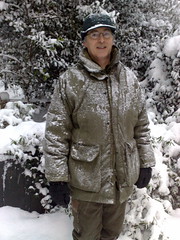
Still, it's a chance to give some of the more serious kit a proper test. This is the Arktis Falklands coat. It's proving excellent. Good materials, well designed and well put together. The snow sticks to it, but inside it's dry and warm as toast. The big cuffs go well over my ski gloves, and there's a high fleece collar to stop the stuff dripping down my neck. There's a zip-on hood, which I haven't used yet. 

One minor drawback I've discovered with the coat is that fibres of the filling tend to creep out of the green nylon inner liner, leading to white pilling on the inside of the coat. It doesn't seem to affect performance at all, but when you take the coat off you have little bits of white fluff stuck to the layer beneath.


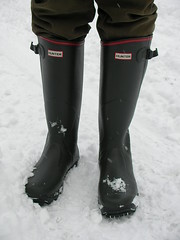
Also trying out the Hunter Bamboo Carbon wellies in the snow - excellent grip from a proper sole, and really good insulation - a world apart from the old basic rubber welly. The soles feel soft and springy, making walking easy. My toes would be frozen in ordinary wellies by now!

Friday, 16 January 2009

Brocock Contour

Who needs to go all the way to Florida for the Shot Show when you can stay in the office and people send in stuff like this? Just launched, from £375, 30 full 12 ft lb shots per charge, .22 or .177, 27.5in overall. I want one!

More on Brocock's website...

Monday, 29 December 2008

Shooting the Air Arms S510

Looks cold doesn't it - it was!

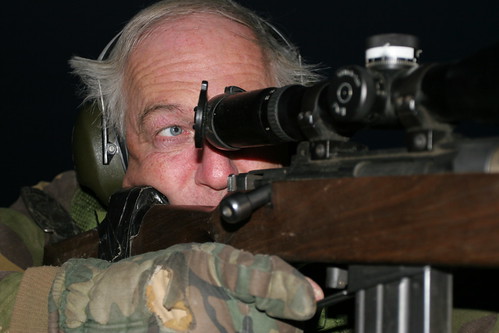
I was hugely impressed with the Air Arms S410, which I used during the summer and which features in my airgun hunting DVD. It's a great rifle - simple to use, consistently accurate, with a neat bolt and magazine arrangement so you can reload quickly. After years of shooting spring powered (and Theoben gas-ram) airguns, shooting a precharged pneumatic was a revelation.

The S410, though, suffered some sort of accident that rendered it pretty much useless. Basically, the barrel got bent. My best guess is that either the dog or one of the kids sat on it while it was in the gun-sleeve, laid across the back seat of the car. The S410 has a very thin barrel, and the large can-type moderator fitted on the end only serves to increase the leverage if it falls or gets leaned on. Yes, I know, it's important to look after your gun etc etc - but in the real world things don't always go according to plan, especially when there are youngsters and clumsy labradors around.

So... I've been looking forward to getting my hands on the latest version, the S510. This one is in .177 calibre (the S410 I tried was .22), not my normal choice for hunting. I took it out today, not for any serious hunting but just to zero it and get a feel for how it works.

First impressions were superb. The most obvious difference from the S410 is the barrel, which now has a larger shroud. This is, in effect, a full-length moderator, which makes the whole package much shorter and improves handling beyond belief. I found the S410 rather unwieldy, and certainly awkward to use from a vehicle or in dense woodland. The S510 is totally different, balancing nicely between the hands and coming to the shoulder so well you are almost tempted to shoot it shotgun-style.

The build quality on this gun is superb. I was specially taken with the woodwork - nice crisp chequering, and lovely dark wood inserts at the end of the fore-end and grip-cap. The stock shape is perfect for a right-hander, with a good high comb bringing my head into line with the scope.

The S510's bolt is a huge improvement
- and easy to operate with frozen fingers.

The next major difference is the bolt. The bolt on the S410 reminded me of the old Crosman bolt - rather thin and wiry, and not very positive to close. You'd close it, walk a few paces, then feel you should check to make sure it was still shut properly. Pulling it back to cock and reload was suprisingly hard work, with only a small rounded knob to grab hold of. The S510 bolt is completely different, and a huge improvement. It's not a traditional bolt at all, more like a miniature side-lever with a straight pull-push action. It's easy to operate, and opens and closes very positively - brilliant!

I fired a few shots at paper targets to get the scope zeroed, and was pleased to find that the rifle shoots just as sweetly as the S410. Accuracy is every bit as good, and the .177 pellets certainly hit the backstop hard (I was using Bisley Super Field - the only .177s I had in the cupboard, but they seem to work well in the S510).

I plan to adjust the trigger (which seems straightforward, looking at the manual, and the allen keys came with the gun), shoot a few more targets at different ranges, then get out and do some hunting - I'll let you know how I get on.

Thursday, 30 October 2008

The trouble with lead-acid batteries...


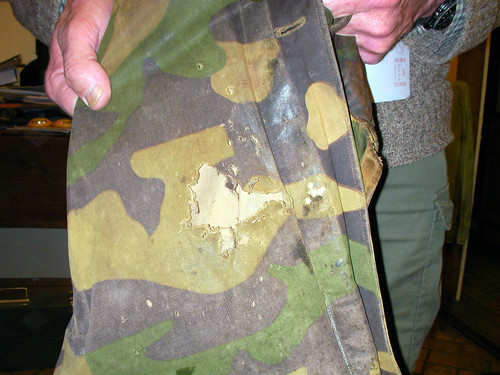
...is they make holes like this in your clothes. And gloves:


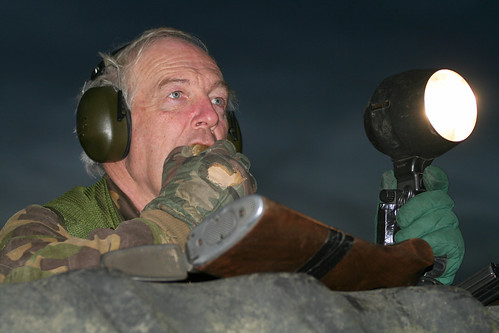
I visited Robert Bucknell yesterday, and he showed me the damage to his foxshooting coat - the result of carrying the old style non-gel lead-acid batteries to power his lamp. The camouflage pattern is Czech, apparently, and he finds it particularly effective, so he still uses the coat.


Nowadays he has gel-type batteries that don't spill - and like me he's looking forward to trying the ultra-light new lithium ion battery from Deben. Deben's first batch sold out in no time, but more are on the way.


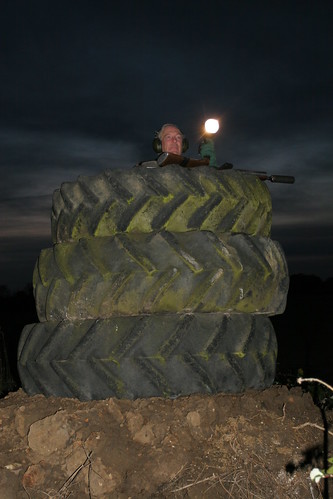
Robert has built a new tyre tower at a strategic spot on his farm. He's a big fan of the tyre system, especially this time of year as the tyres give plenty of protection from cold winds. More info and photos in the next issue of the magazine.

Thursday, 23 October 2008

Testing the Purdey Sporter

I spent this morning at the West London Shooting School, trying out the new Purdey Sporter over-and-under - the result of 5 years development by Purdey in conjunction with the Italian firm Perugini & Visini of Brescia.

Richard Purdey watches the gun being put through its paces at the grouse stand

And how did it shoot? In a word, amazing! A year or so ago I shot a plain black-actioned prototype, which was a lovely gun to shoot. Some 84 separate refinements later and Purdey have breathed magic into the Sporter. Richard Purdey described it as 'flattering' to shoot, and it certainly flattered my shooting.


It feels natural and lively in the hands, and performed as well on fast, close partridge targets as it did on driven pheasant clays off the WLSS high tower. We finished up with one of WLSS's famous flushes, and that's where the Sporter really came into its own. Although I normally shoot a side-by-side, I quickly forgot about the gun and was able to concentrate on the targets, which is how it should be.

Stephen Murray, who has been in charge of developing 
the Sporter from the beginning, tackles the flush

The Purdey Sporter really is a lovely gun. It's a true Purdey, despite the amount of CNC machining that goes into it, and the association with P&V. If anyone tells you it's a badge engineering job, a Perazzi with a Purdey label, then they're talking rubbish. This feels and shoots like no other over-and-under I've ever used. Every detail has been picked over and refined by Purdey's gunsmiths, who put hours of hand labour into every gun - the machining simply speeds up the early stages in the building of the gun.

Not a sign you see every day

The Purdey Sporter is currently available in 12-bore only, with 30in or 28in barrels and Teague chokes. It has a round bar trigger plate action, with removable trigger mechanism. Weight is around 7 3/4 lbs. And it costs a cool £28,750. Credit crunch or not, you'll have to be quick to snap one up in Purdey's South Audley Street shop, otherwise there's a 6 month waiting list. A 20-bore is on the way, and should be available mid-2009.

At that price I won't be getting one anytime soon, more's the pity - but it was a real privilege to have the chance to shoot this fabulous gun.

FOOTNOTE: Normally after firing 100+ shells, I would expect to have a bit of bruising on my shoulder. With the Purdey, no noticeable mark at all. That must say something about the gun, either the stock shape or the recoil or both. Thinking back, it was very comfortable to shoot but, like so much about this gun, the difference is as much about what you don't notice as what you do.

Wednesday, 8 October 2008

Leafy new camo suit


Great excitement in the Shooter office today, when this Jack Pyke Light Leaf Concealment System ghillie suit arrived for testing and review. We dressed up Vicky in the suit and stood her against an ivy-covered wall to see how it blended in.


The colour is more suited to autumn woodland, but it's clear that the break-up effect of the sewn-on 'leaves' is fantastic. You can see the effect better in this black-and-white version - after all, most animals see in something approaching monochrome anyway.


I can't wait to get out in the woods and try it. Sadly, though, the airgun magazine team have got first dibs - so I'll have to be patient!

Saturday, 30 August 2008

Where's he been?

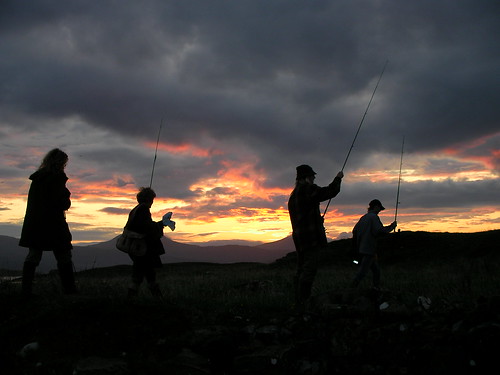
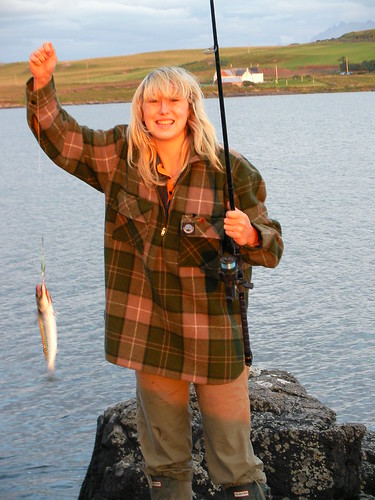
Two weeks go by and not a peep out of James? Yup, I've been to the land beyond mobile phones, broadband internet and skinny cappucino with an extra shot - the west coast of the Isle of Skye. It was fabulous to get away from all the daily bull and concentrate on the stuff that really matters - spinning for mackerel off the rocks, stalking rabbits, walking the hills for grouse (surely there must be one here somewhere?!), and even a few hours flyfishing for salmon (almost as scarce as the grouse).

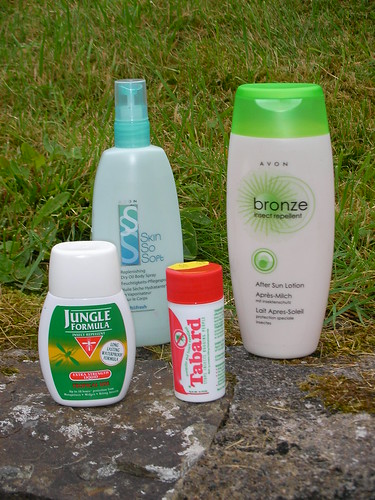
Here are a few pictorial highlights. More on my flickr page. I'll add some more detailed posts once I've cleared the logjam in my inbox - including a report on field testing a selection of midge repellents...

In search of grouse

Sunset over Macleod's Tables


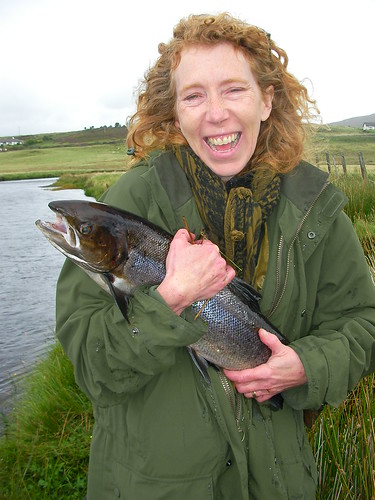
Sara caught a salmon on the Snizort!

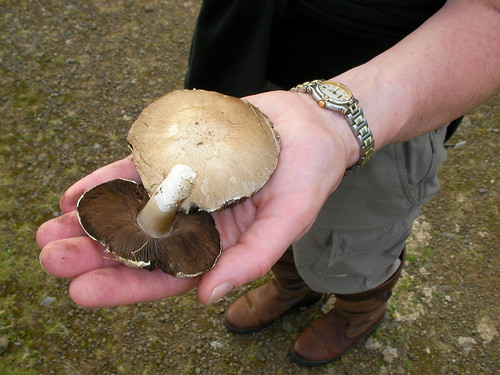
Picking mushrooms

There must be a grouse round here somewhere!

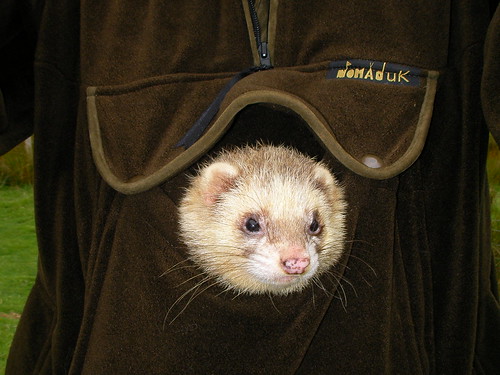
So that's what the pocket on my Nomad fleece is for!

Heading home after spinning off the rocks

Some work better than others...

Emma with mackerel

Sunday, 13 July 2008

Air Arms S410

Today I've been out with a new Air Arms S410 airgun - and what an airgun! I've had very little experience with pre-charged pneumatics, but I was seriously impressed with this one. It's a .22, takes a 10-shot magazine, and the reservoir is a cylinder under the barrel (with a pressure gauge in the fore-end).

I've fitted it with a Nikko Stirling scope, and used one magazine of pellets to zero the combo at 25 yards, then went out after rabbits. Result: five bunnies and a pigeon, all killed stone dead with a single shot each, at 15-35 yards. The pellet below is a Bisley LRG, recovered from the pigeon when I breasted it tonight. It has struck bone and been rather deformed, but you can clearly see the rifling marks.

I'll do a more thorough review of the S410 in due course, but after my first experience with the gun I fear it may be a bit biased!

Sunday, 6 July 2008

Minosharp knife sharpener


Visiting a friend's for dinner, I spotted this Minosharp knife sharpener in the kitchen. I'm always interested in knife sharpening gadgets, although I'm usually disappointed. Not this time! I tried it with a little pocket knife I had with me - and the results were superb.

The Minosharp is made by a Japanese company, and is sold for sharpening those fancy Japanese cooks' knives such as Global. It consists of a plastic handle, with two ceramic wheels set in a shallow water bath.


You put a small amount of water in the bath, replace the clear plastic cover, and put the knife blade into one of the guide slots. Then move the blade back and forth in the slot. The slot holds the blade at exactly the right angle to the ceramic wheel, and the wheel turns so that the water is applied automatically.

There are two wheels - one coarse and one fine. Give the blade a few strokes on the coarse wheel first, then the fine one. Result, one very sharp knife, with the minimum of metal removed from the blade. It's virtually foolproof.

This sharpener won't work on knives that are ground on one side only, or on serrated blades. But for a regular knife blade, it's magic, and at under 20 quid it's good value. I'm off to get one on ebay!


Oh, and the knife I tried with the sharpener - it's a lovely little pocket knife by British knifemaker Mick Wardell. The blade is only a couple of inches long, and has a lovely wood-grain type pattern in the steel. GunMart editor Pat Farey, who gave me the knife several years ago, had my initials engraved on it. It's a little beauty, I think you'll agree.

Thursday, 3 April 2008

It's lined with hamster and it costs how much??!


It's easy to be cynical about companies like Purdey charging huge amounts of money for clothing and accessories. OK, they do make exceedingly good guns - but does that justify paying three or four times the normal price for a hat, coat, etc?

At least, that's what ran through my mind when I walked in to the famous South Audley Street Long Room for a sneak preview of the new Purdey range for this season. A plain woolly hat caught my eye - it looked nice and cosy for wildfowling, ferreting and the like. I picked it up and looked inside - and nearly fell over at the price tag of well over £100... for a woolly hat??!

But then in walked Rori Thompson from Purdey's product development department. We got chatting, and things began to fall into place. He is clearly passionate about the clothes: not just the designs, but everything that goes into them, from the smallest button or stitching.

His line is that the Purdey name is associated with the very best in guns. They make guns the way they should be made, not down to a price. And that's how they approach the clothing. Which may take them to the Isle of Mull to track down the best traditional tweed for a particular coat. Or persuading an oldfashioned leather worker to come out of retirement to produce some special item for the range. Or in the case of the coat pictured at the top of this post, sourcing traditional hamster fur for a lining. What a fascinating job!

So now I feel I understand why Purdey gear costs what it does. Sadly, however, I am no nearer to spending £100 on a woolly ferreting hat. But then I don't think I was ever their target market anyway!

In case you're wondering, the coat pictured costs £650. The lining is extra, at £1,220! See the new range from September at www.purdey.com.

Tuesday, 18 March 2008

Musto merino wool vest


Over recent weeks I've been testing Musto's new merino wool vest. I've worn it in a variety of conditions, from the foreshore at Cellardyke, to a mild day on the North Downs in Surrey. I won't inflict a picture of me wearing it on you, so here's a photo of a merino sheep instead.


Notice how warm and cosy the sheep looks. This is because merino sheep discovered long ago how to keep comfortable outside in all weathers. Us humans still can't get it right, and we keep turning to the petrochemicals industry for enlightenment - not always a good idea.

When we encounter a problem, it's often a good idea to look around and see how nature has solved it. There's a whole science based around this - it's called biomimicry (or biomimetics), and it led to ideas like Velcro, termite-inspired air conditioning etc etc.

The merino sheep grew its own woolly jumper, but not just any woolly jumper. Its wool is cunningly designed to be extra warm, comfortable and breathable. The wool fibres are extra long and fine. They have a complex structure with a hydrophilic centre and a hydrophobic exterior - so merino wool can absorb water without feeling damp. All in all, it's pretty clever stuff, and just the job for wearing when you're out shooting - or so the manufacturers say.

So... is it all a sales yarn, or does the stuff really work? In short, yes. It was great. I own a variety of high-tech base layer garments made of poly-this and micro-that. They're all frightfully clever - but I hardly ever wear them. They just don't feel all that comfortable, to me anyway. They get too hot, or sweaty, or itchy, or whatever, particularly when I'm slogging up a steep slope. So I usually wear a cotton T-shirt as a base layer instead. Not ideal, at least in theory, but it works for me.

I found the merino vest better still. It was warm and cosy in cold conditions when I was standing still. But, equally important, it stayed comfortable as it got warmer, and even when I was walking uphill with a heavy camera on my back, getting hot and bothered.

Apparently merino isn't a good choice for watersports, due to its tendency to hold water. But for my usual mix of land-based shooting and fishing, I've found it great. I tend to grab it every time I'm off shooting now, in preference to my usual T-shirts. So it's probably a good thing that merino wool resists human body odour much better than synthetic materials too!

Friday, 7 March 2008

Satellite tracker


I've been testing the Spot satellite tracker - a device you'd carry to call for help in an emergency out in the back of beyond. It uses satellites to locate your position. When you press a button, it sends an SOS to your predetermined emergency service (or wife, girlfriend, etc). It doesn't use the mobile phone system at all, so it works anywhere you get a clear view of the sky (not indoors, in a cave, etc).

Sound good? If you need it, you'll know you need it. Deerstalkers and lone estate workers spring to mind, but I also know some adventurous fishermen and wildfowlers who could find it useful.

The device is slightly larger than a mobile phone, with rugged styling a bit like the early Motorola PMR446 radios - bright orange plastic, with a thick ribbed black rubber strip around the bottom and sides. It has a simple plastic belt clip, and four buttons on the front with a selection of LEDs to tell you what's going on inside.

So let's suppose you're setting off on some intrepid trip up the glen, away over the hill and beyond. You know your phone will lose signal after the first half mile, and the wife will be worrying herself sick before you're even late for tea. And even though you know she shouldn't worry, there is always the remote possibility you'll slip on a rock and break a femur. At which point it would be rather nice to know that help is on its way.

So you reach for your gun and cartridges, stuff your 'piece' in your pocket, clip your trusty Spot on your belt, and set off...

Wait! You should have set up your Spot first. Fortunately the nice people at their PR agency sent me a detailed sheet explaining what to do, and telling me the pre-set login and password. So I was able to go to their website and change the settings for who to email in the event of me pressing the 'Help!' button. I tried to get it to send a text too, but UK Vodafone didn't seem to be an option - I was offered the USA or Germany, but could see nothing UK-based. Just have to hope my would-be rescuers are watching their email closely then.

The device itself runs on two AA sized batteries, but not just any old AA batteries; this thing needs the lithium type (two supplied). I think if I was going to trust my life to it, I would buy a spare pair and carry them with me. Just in case. To insert the batteries you remove the back cover, using a couple of nifty screws with wire loops attached, handy if you don't carry a coin or screwdriver. The battery compartment, like everything else on this device, looked reasonably watertight. However I didn't chuck it in the pond to check, just in case the PR folks turned less than helpful and sent me a bill.

The belt clip doesn't fill me with confidence. It's thin and bendy and, although there's a ridge at the end to stop it riding up off your belt, I still wouldn't want to trust my life to it. Any stalker worth his salt knows that you have to tie your knife on or one day it won't be there. Same goes for this; I'd tie it on. Trouble is, there isn't a decent anchorage point to tie on to, just one of those little slots for a mobile phone style wriststrap. Probably good enough, but again this is my life we're talking about.

OK, so off we go through the heather. You could save the batteries til you need them, and leave the thing turned off. Or you might choose to switch it to 'track' mode, in which case it sends an 'OK' message every 10 minutes. So your wife/girlfriend/boss/etc can watch your progress on a Google map like this one. Which might be a good thing, or it might not...

In fact I still haven't managed to access the 'track' mode. I've pressed all the right buttons, and it simply refuses to work. I suspect I need to sign up (and pay for) an additional service.

What I have done, however, is use the single-shot 'OK' mode, which sends a single 'I'm here and I'm fine' kind of message to your chosen ones, together with a Google map link. If things go belly-up, you'd just press the next button along to raise the ante, with a 'Help!' message. Or if you've slipped into a pit of snakes and broken your leg and used up all your cartridges, presumably you'd swallow hard and go for the 'SOS' button, and watch the sky for the Coastguard, Mountain Rescue, SAS, or whoever is appropriate to your location and predicament.

In use, I've found that the device isn't half as instantaneous as you imagine. I was out walking the dog and pressed the 'OK' button, then drove home and checked my email expecting to find a nice little Google flag on my favourite dogwalking spot. No, the ping had been delayed, presumably while the device picked up various satellite signals and then sent its message. The flag showed me in the car, 100 yards from home! Still, that wouldn't be a problem for your average intrepid adventurer, or mountain walker casualty for that matter.

Will I be buying one? Honestly I'm tempted. It costs around £150, with an annual subscription of around £65. If I'd know about it when my daughter set off for her gap year, I'd have got one for her. It really comes into its own when you go beyond the reach of mobile phones, or will be unable to give a precise location (hand-held GPS would help here of course). For estates worried about their 'duty of care' to lone workers, I should think it's a must.

I believe there are one or two similar devices coming onto the market, so I'll keep an eye out and see how they compare. See the Spot at www.findmespot.com. There's a similar looking device being offered by Scottish Communications here.